
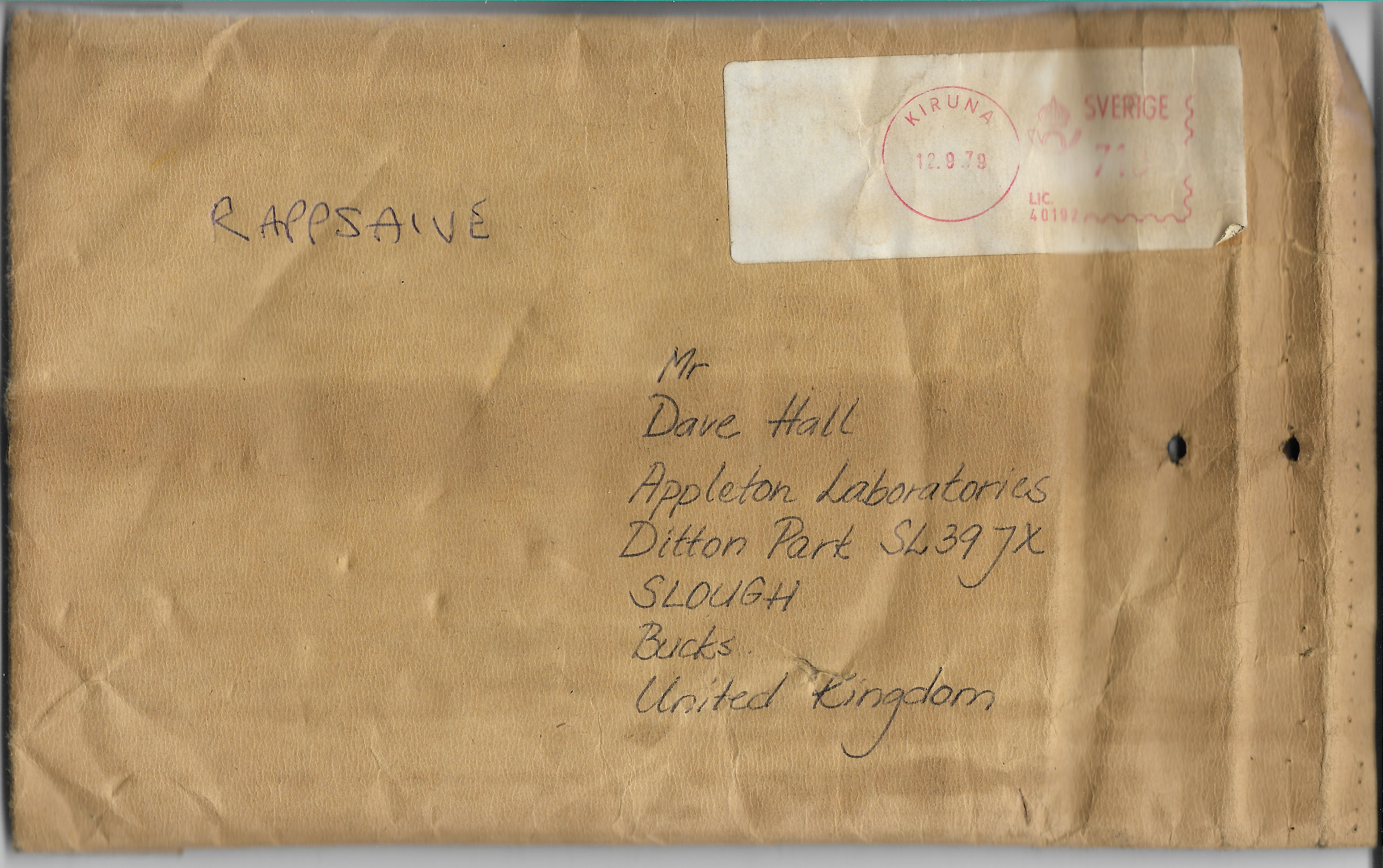
The Envelope
The envelope containing these photographs, addressed to my father at the now-defunct Appleton Laboratories.
In January 1979, my father spent a snowy few weeks at the Rappsåive downrange station, a hut in northern Sweden situated, in the words of the Esrange Space Centre handbook, "close to the typical impact location for sounding rocket payloads". Alongside Swedish scientist Lars Andersson, he observed a series of rocket launches, taking measurements and listening for impacts to help determine where the rockets had landed. This was at a time when, as my father put it, "Health and Safety at work in the UK was not a major issue".
Remarkably, it appears the hut still exists over 40 years later:
A short while after the trip, Lars sent my father the following photographs:
The envelope containing these photographs, addressed to my father at the now-defunct Appleton Laboratories.
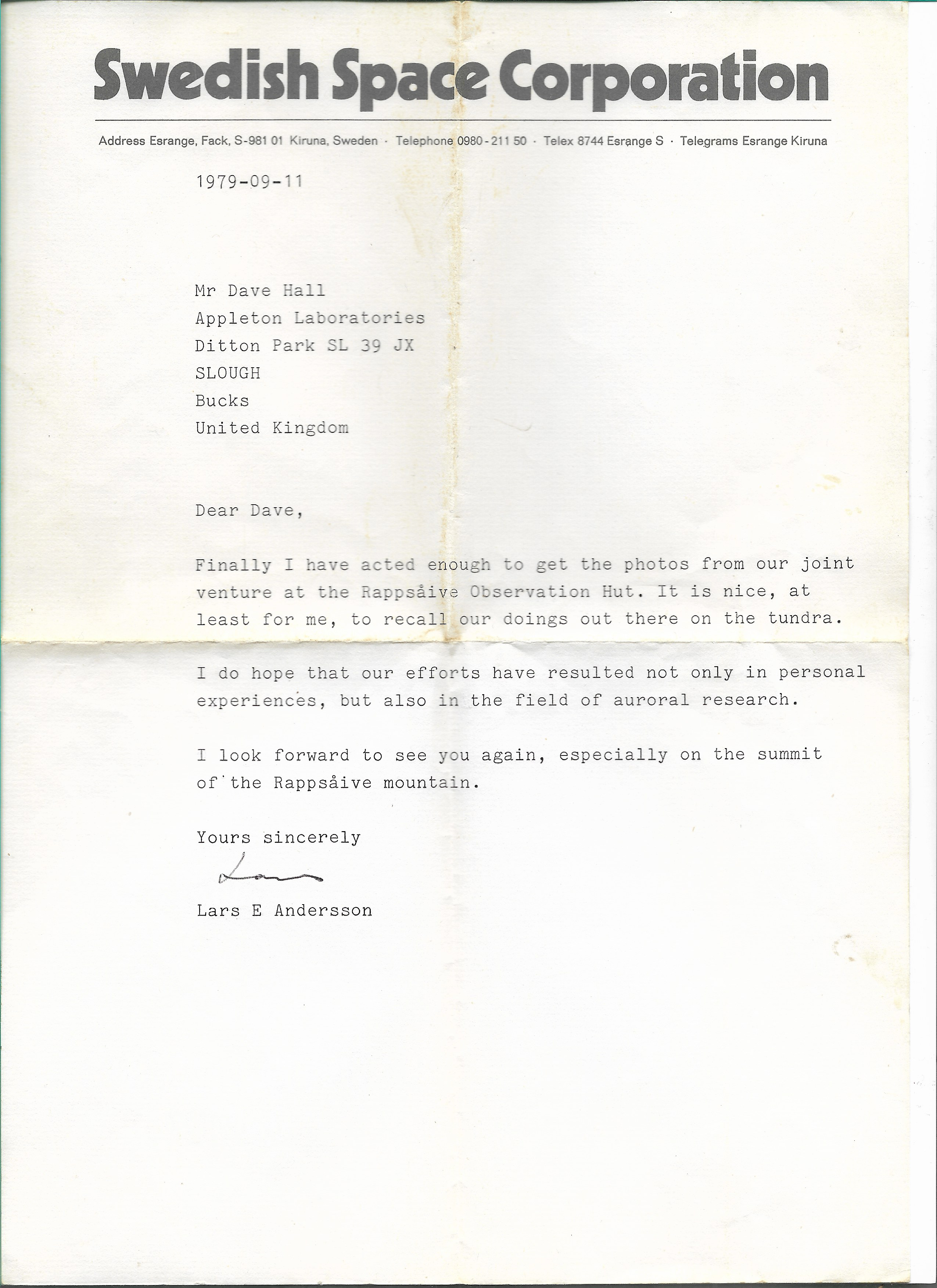
The letter that accompanied the photographs.
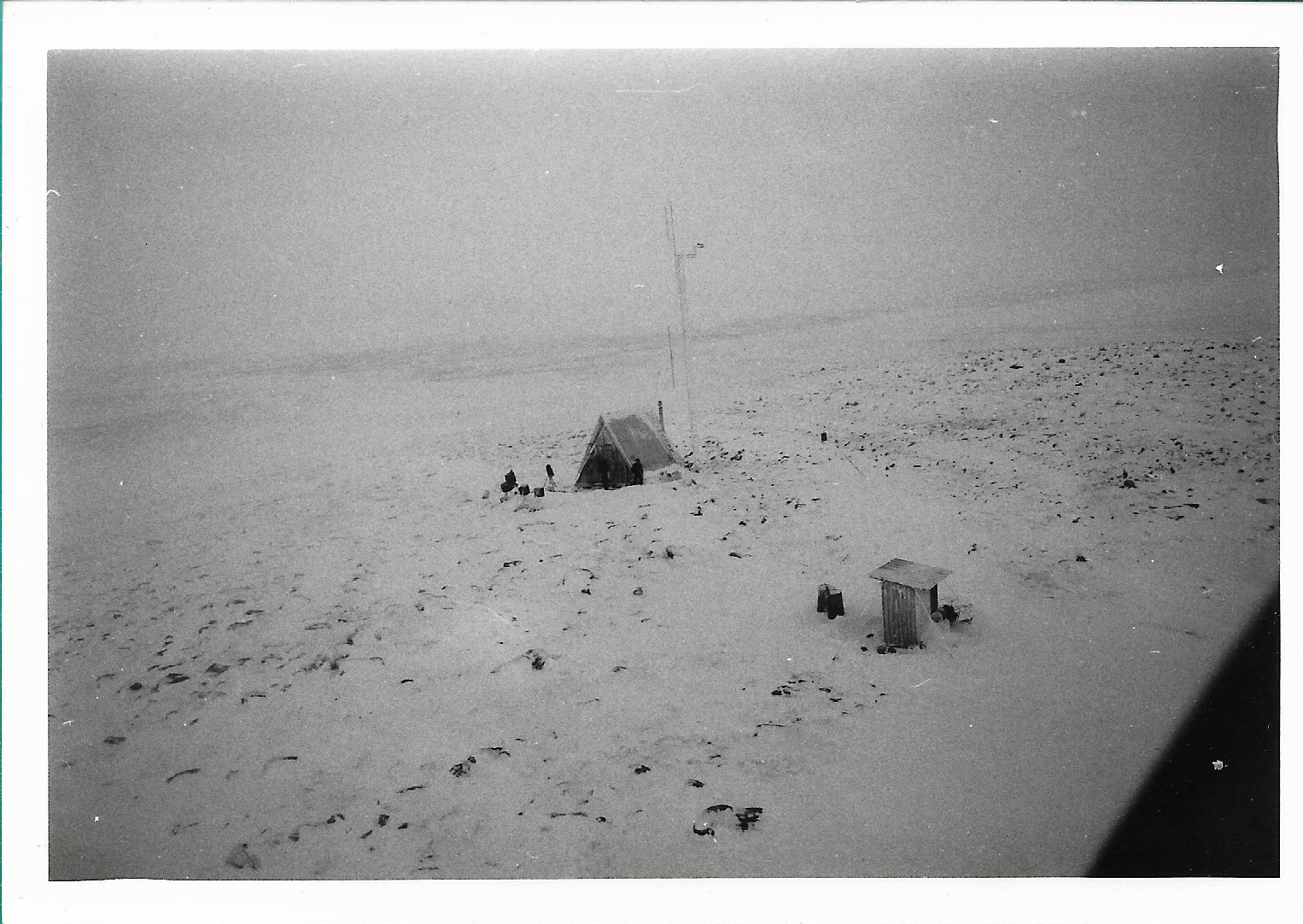
"The pilot tapped me on the arm soon after we passed the downrange station and pointed ahead to Rappsaive. It rose out of a plain and was very symmetrical. Lars was waiting as we flew in; the top of the mountain was relatively flat for about a 50m diameter, it was easy for the helicopter to land."
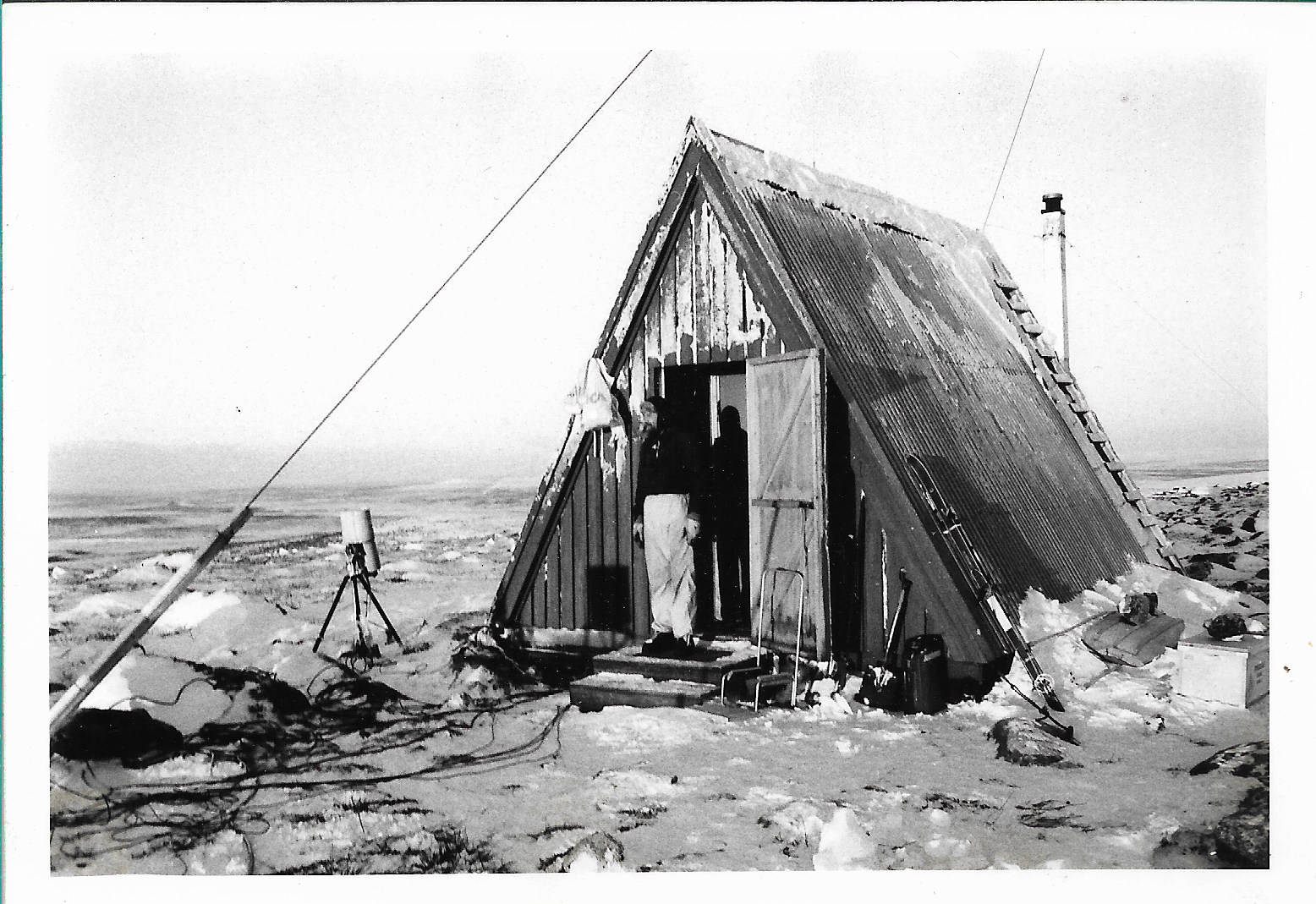
"Lars had had considerable hunting experience and his other main task was to act as my minder and make sure that I was safe."
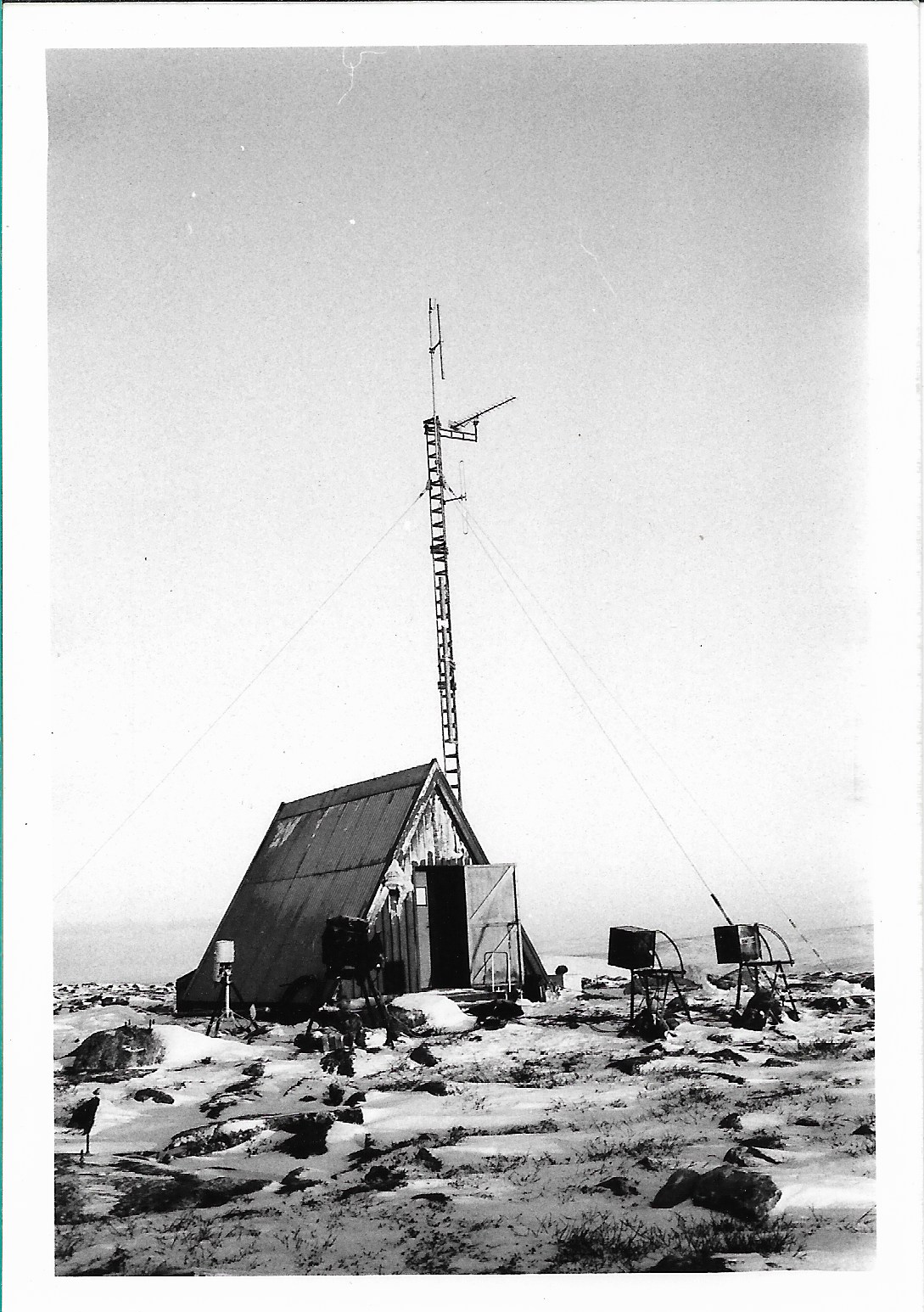
"In order to assist the recovery of rockets, which took place mainly to prevent the build up of waste rather than find re-usable pieces of rocket, a Lapp-style hut was placed on the top of Rappsaive with microphones attached to each corner. The recordings from the microphones gave some indication of the direction in which a rocket had landed."
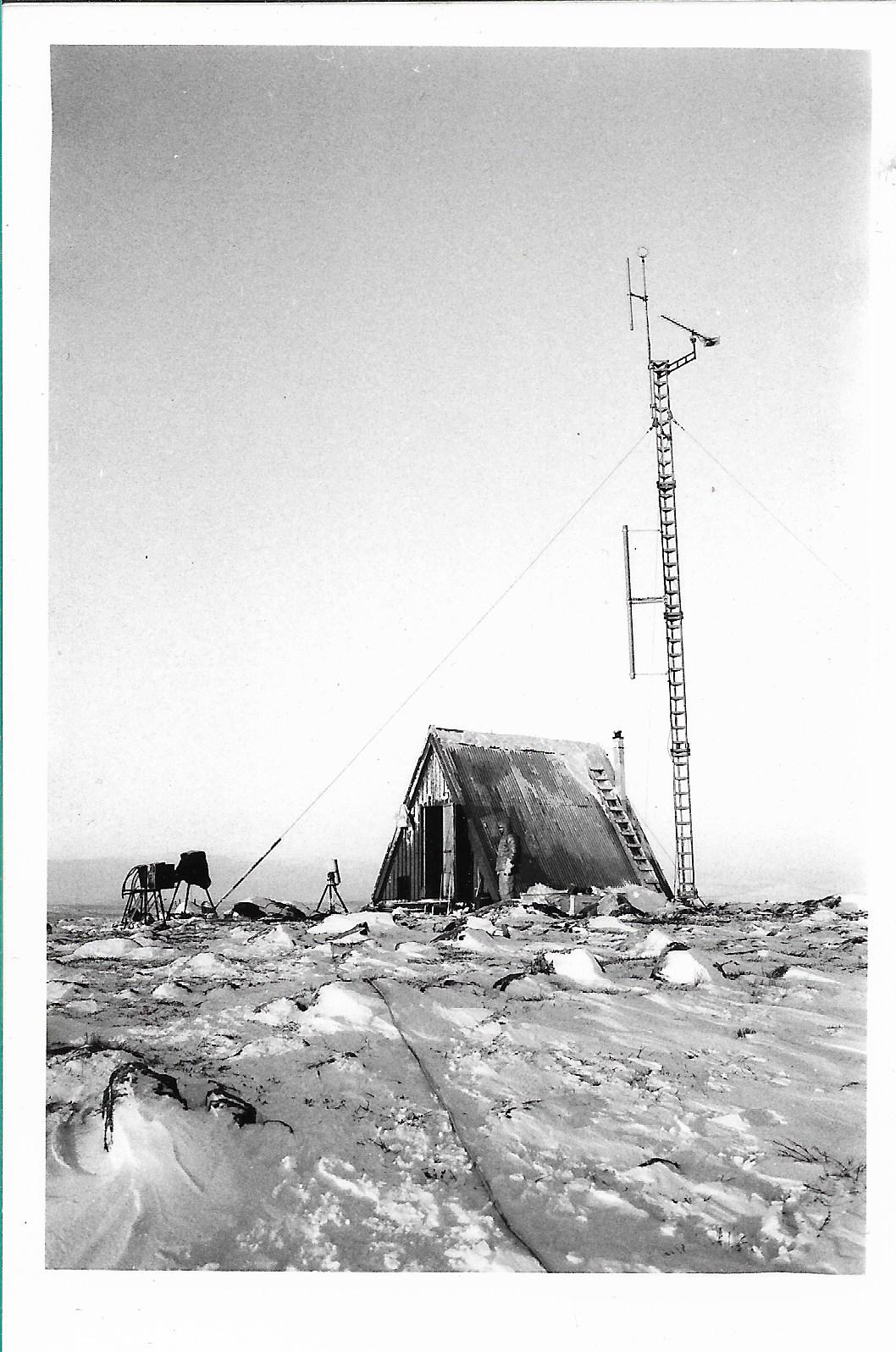
"The hut was triangular about 10 feet high, 8 feet wide at the bottom, and 14 feet long, made of wood as were most of the houses in Kiruna itself."
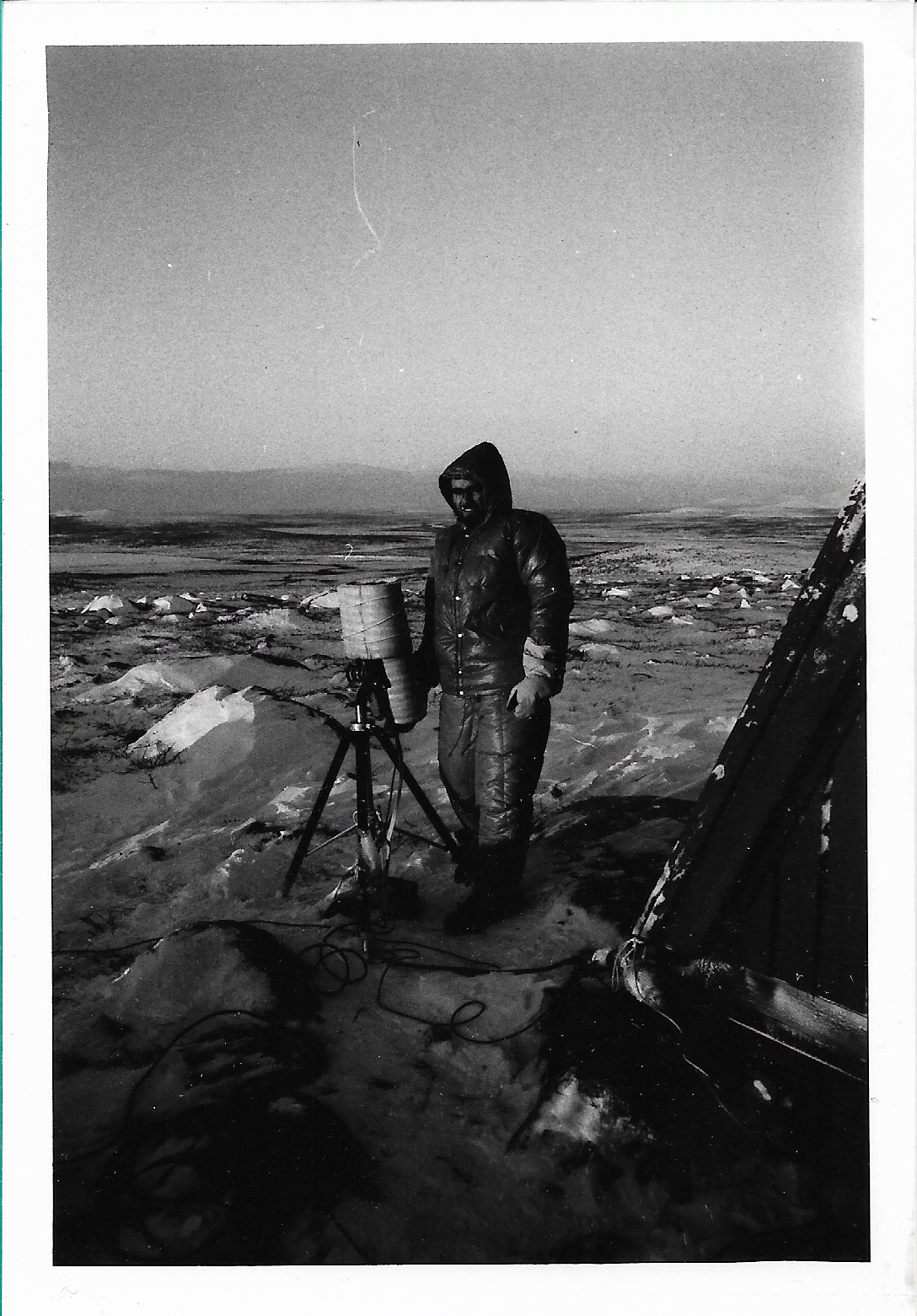
"[after arriving] we spent the afternoon assembling our observing instruments, the low-light televisions, photometers and cameras."
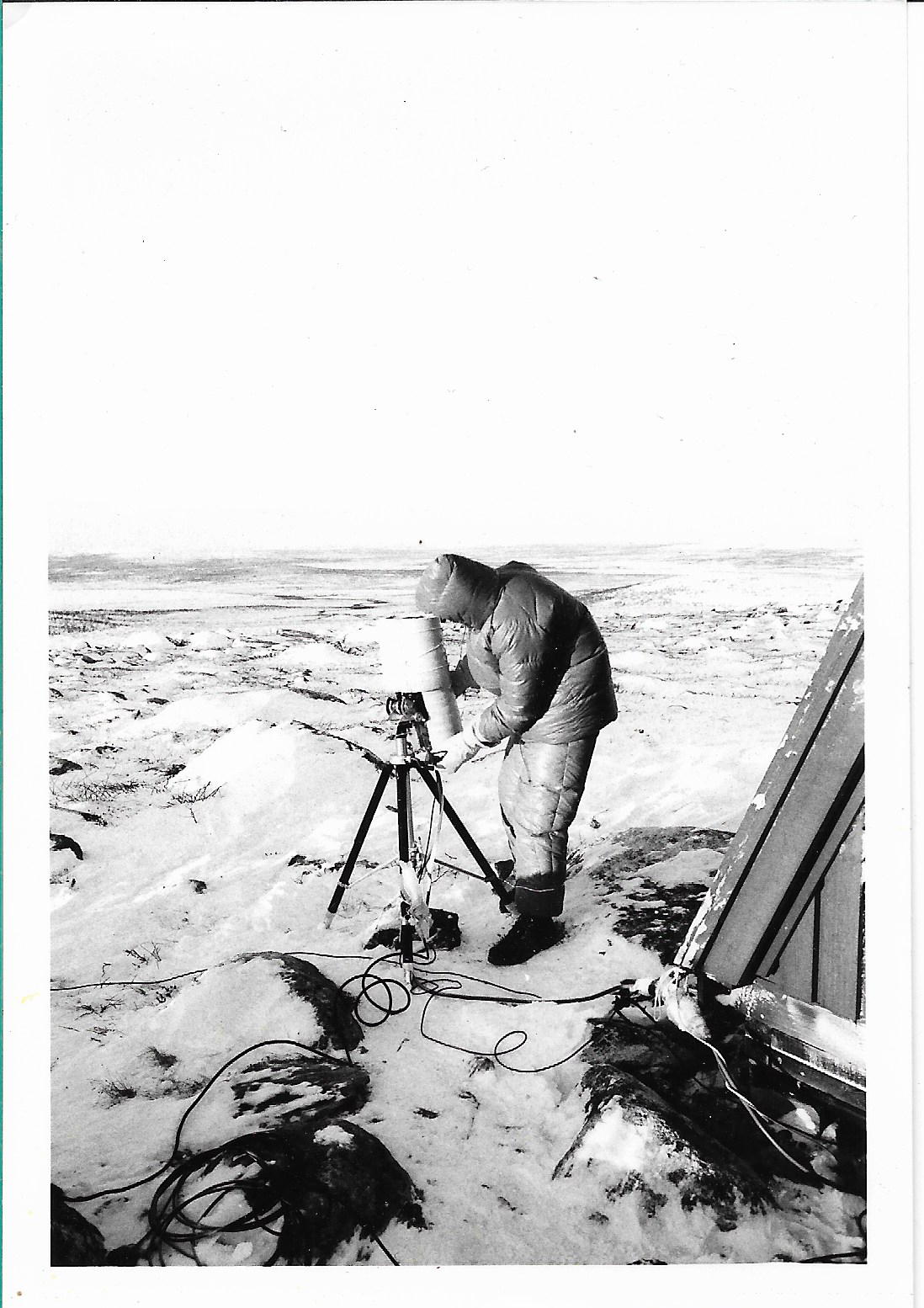
"We had to feed cables from the interior of the hut to the instruments. This was rather more difficult than I had expected because the temperature was minus 30 degrees and the cables were difficult to bend."
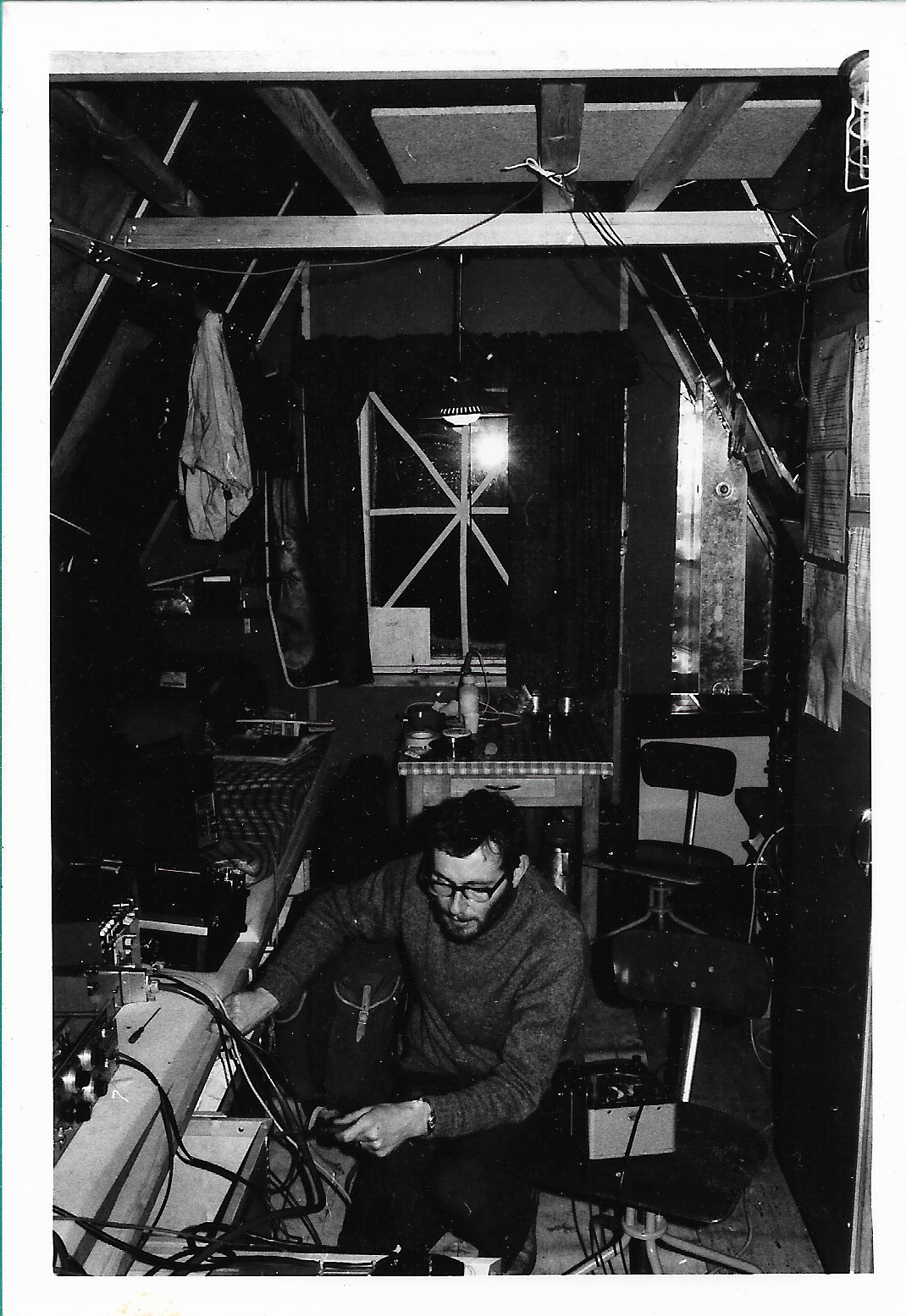
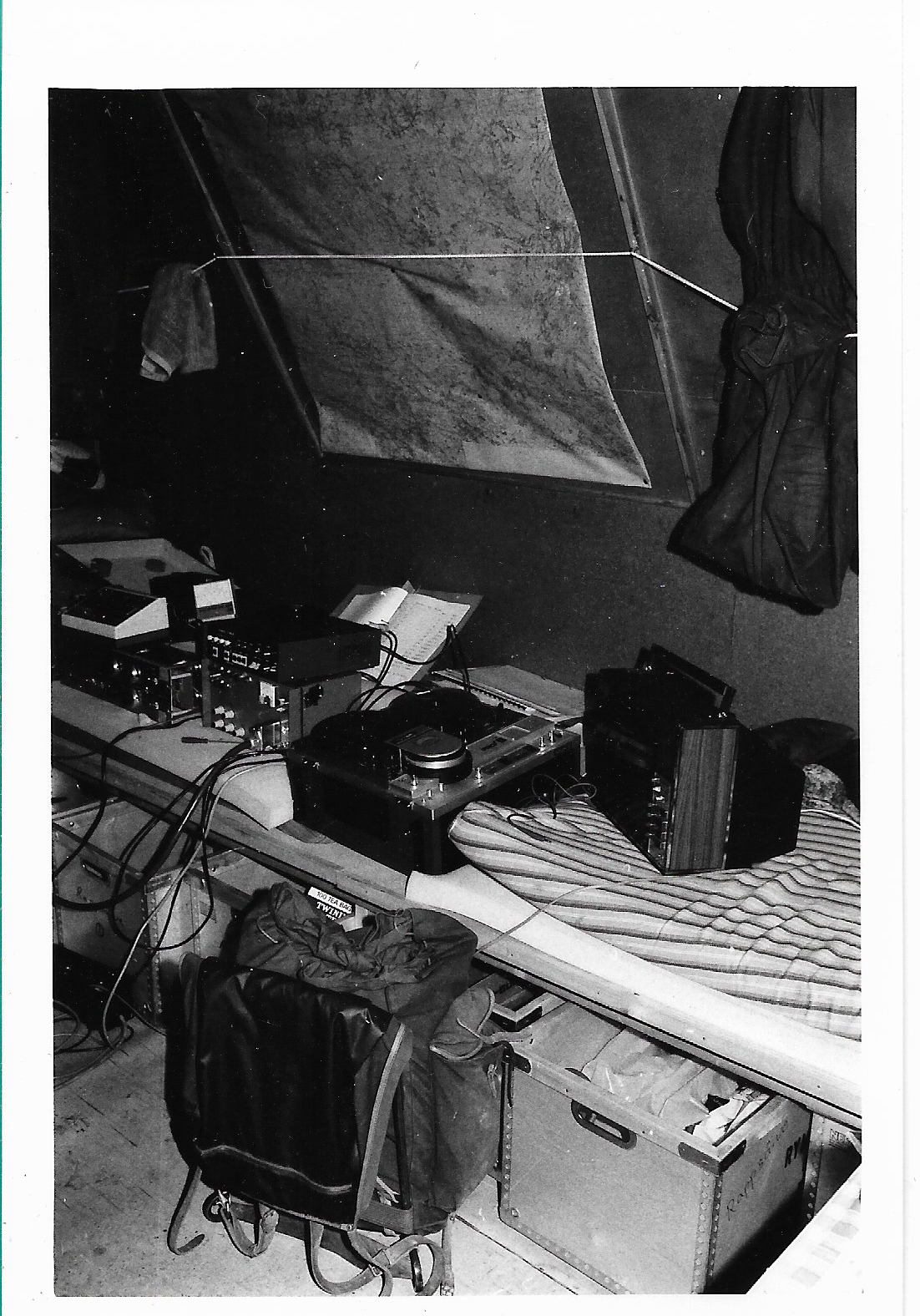
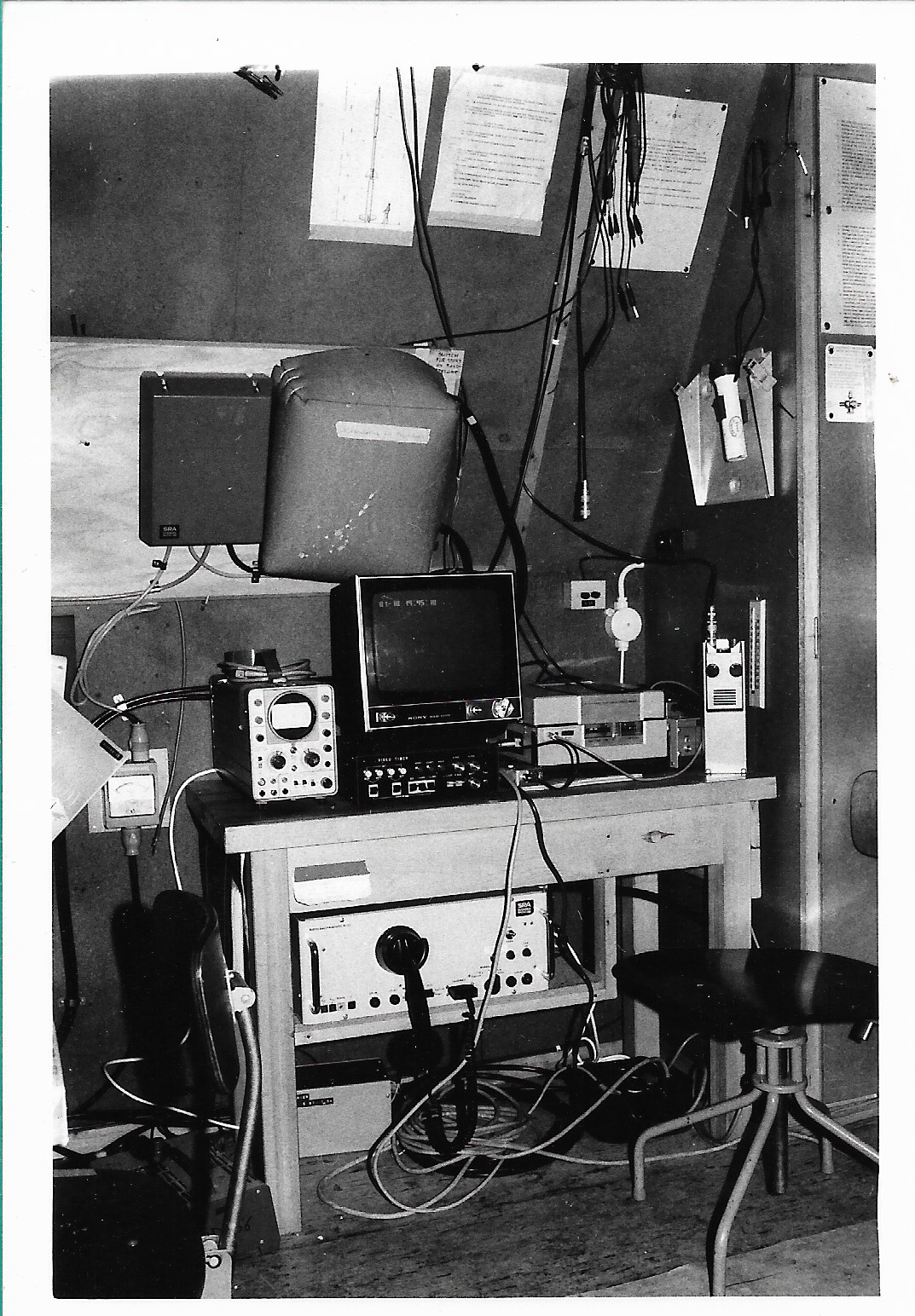
Setting up for countdown in the Rappsaive hut. My father's bed in the foreground, with equipment on it. Lars's bed is behind.
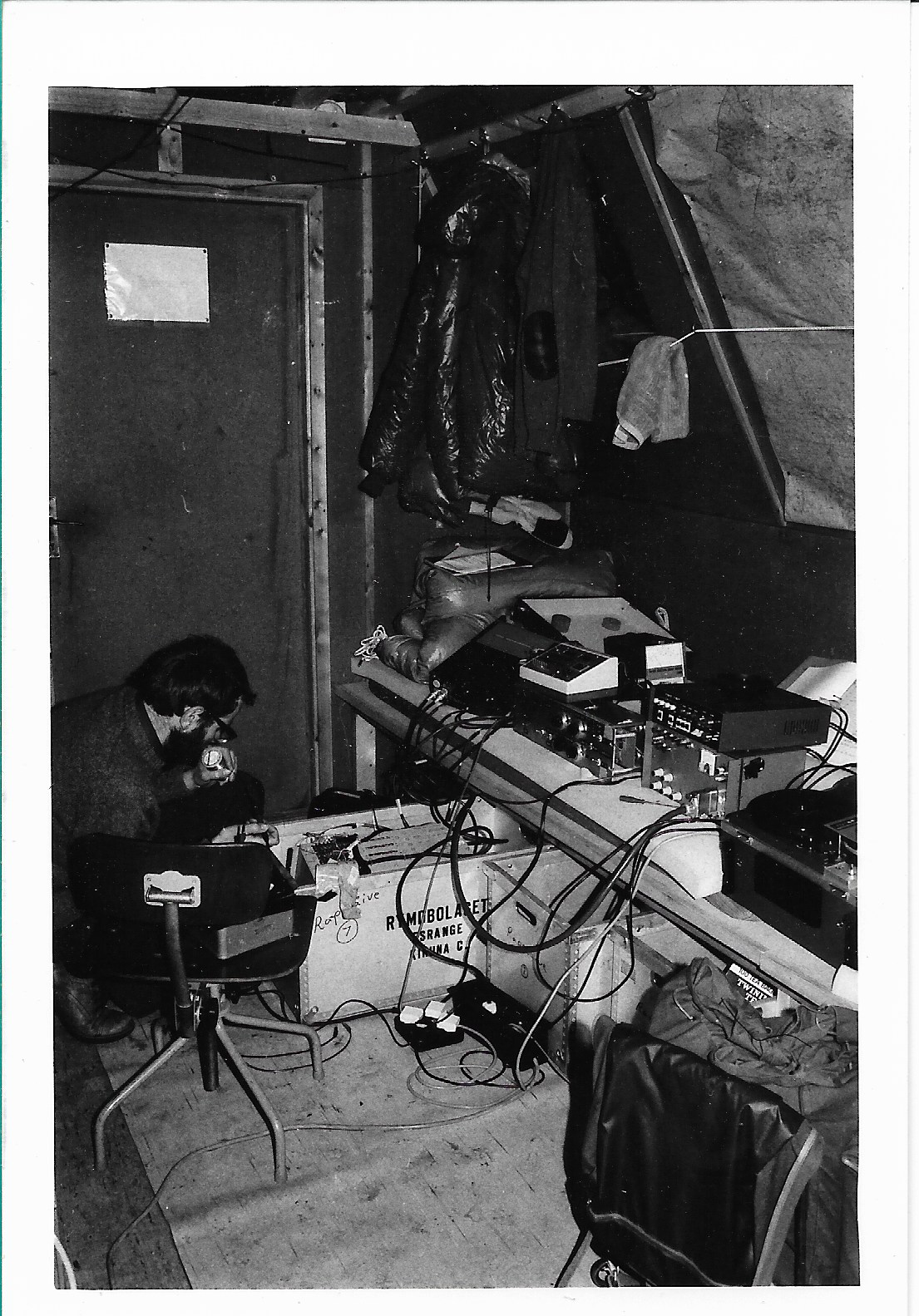
"At about three in the afternoon we would pull our equipment out from underneath our beds, and place it on our beds, connecting it to the instruments outside the hut and then checking in turn that all were operating satisfactory. One point in the countdown was for those at launch site to check; 'Are you ready for launch at Rappsaive?' We always were."
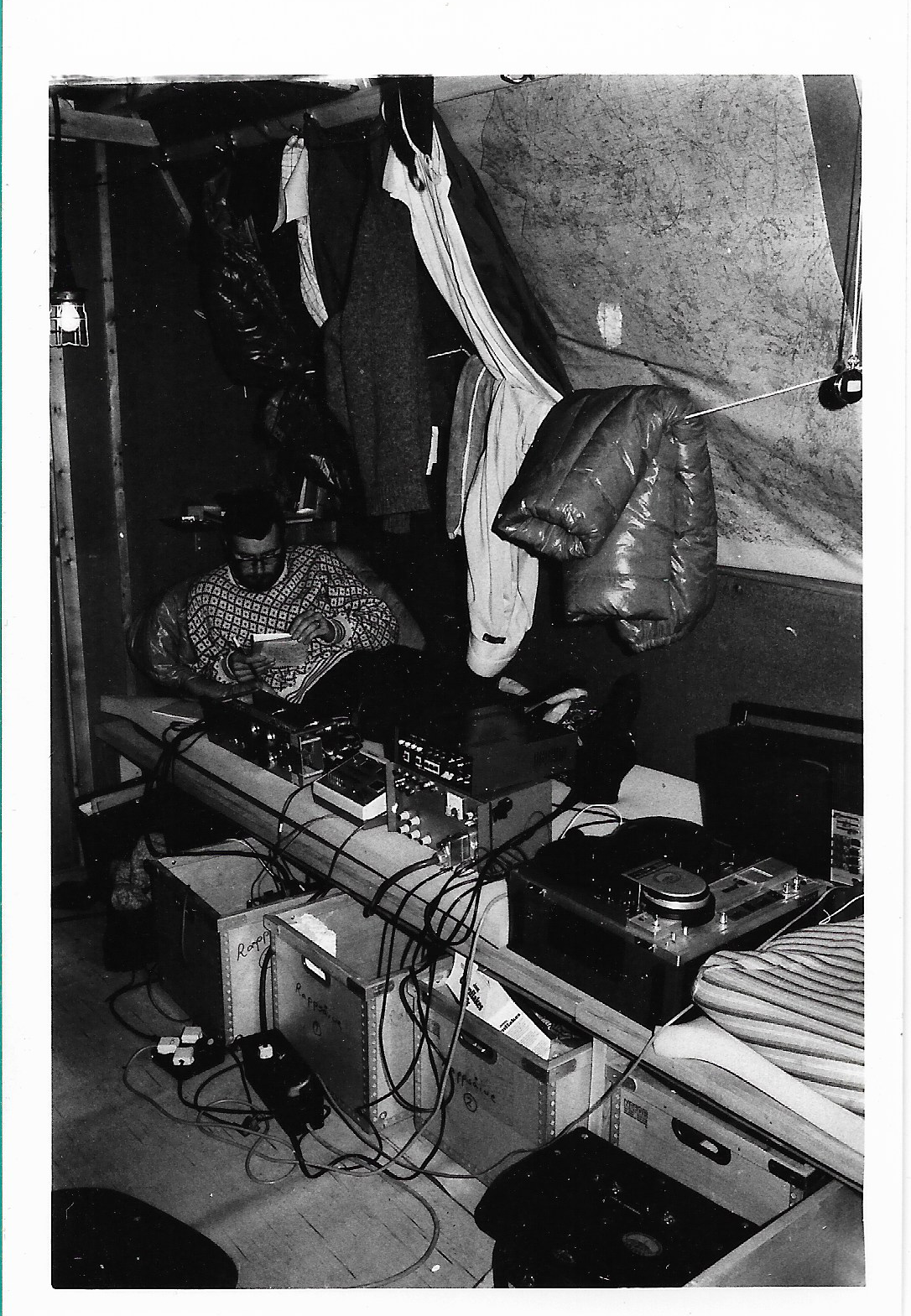
My Father's bed: "We used the area under the beds for storing the equipment for operating our instruments and put the equipment on our beds during rocket countdowns."
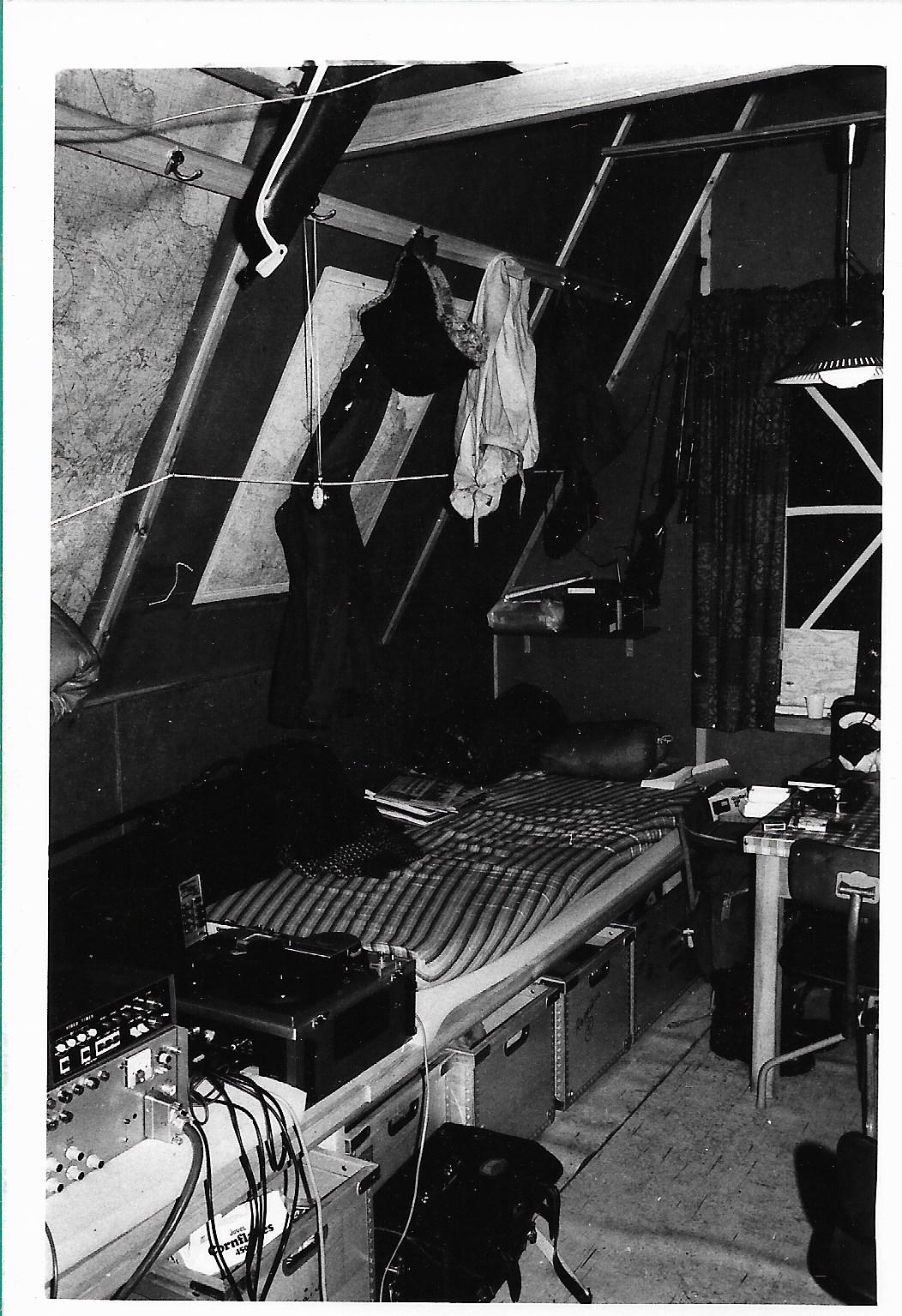
Lars' bed: "The living area also had a small two-ring gas cooker and a table with a single chair next to Lars' bed ... After dinner Lars suggested that we play chess and he also produced a bottle of lingenberry wine that we shared. We finished every day in that way. He usually beat me, but not always."
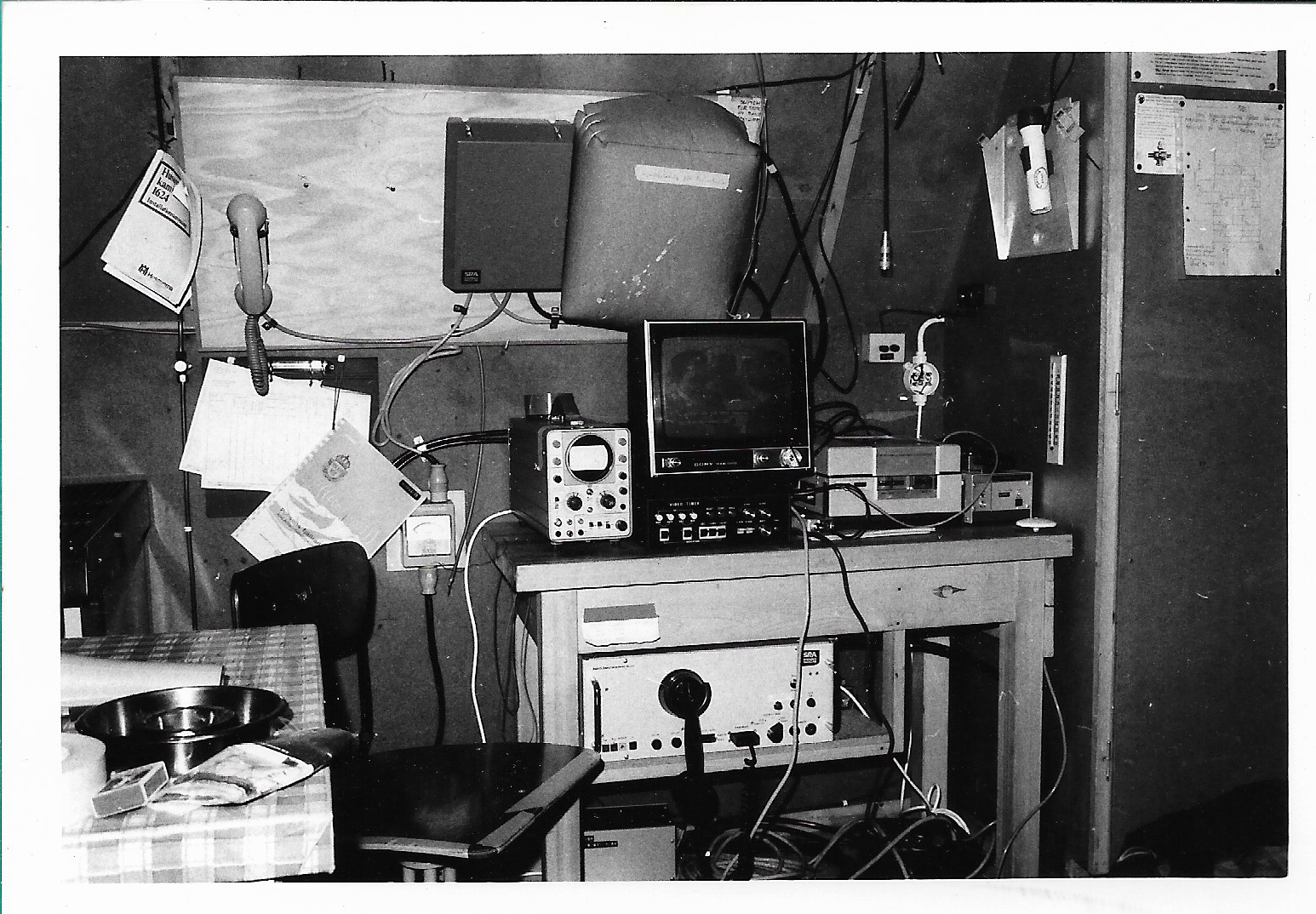
"On the sixth night the wind was very strong at the top of Rappsaive. We first noticed it when Capella started rocking back and forth on our monitors as the wind blew our cameras outside the hut. It was unpleasant going outside to try to make them more secure because of the danger of being blown off our feet. That problem was eventually solved because we found that the strength of the wind and the wind direction meant that we could no longer open the door, the wind was too strong."
"After checking that all equipment was operating satisfactorily, we went outside to look for the rockets coming down ... We heard bangs and saw flashes as the rockets landed but none within about a kilometre of us. "
"It was descending close to us, but clearly not going to hit us. It landed a few hundred metres away on the lower slopes of Rappsaive. Later when we reran the television recordings the bright light appeared in the very middle of the screens and appeared to be heading directly for the camera, drifting out of view at the last moment."
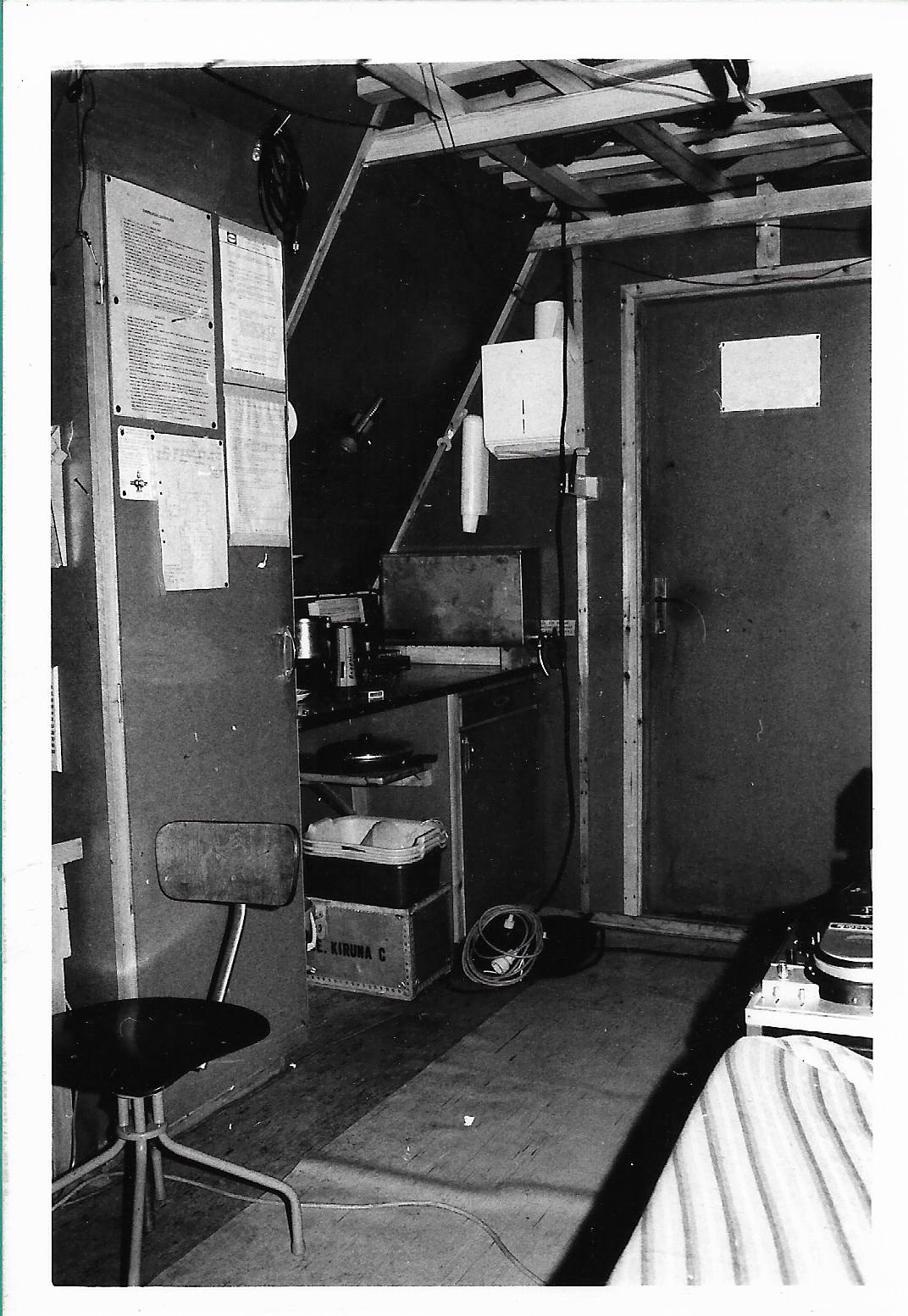
The kitchen area: "I bought the usual collection of food - meat, potatoes, vegetables, cereal, bread, and fruit juice ... Lars was taking with him a cured reindeer shoulder that seemed to be all that he ate, peeling off a slice off with his knife"
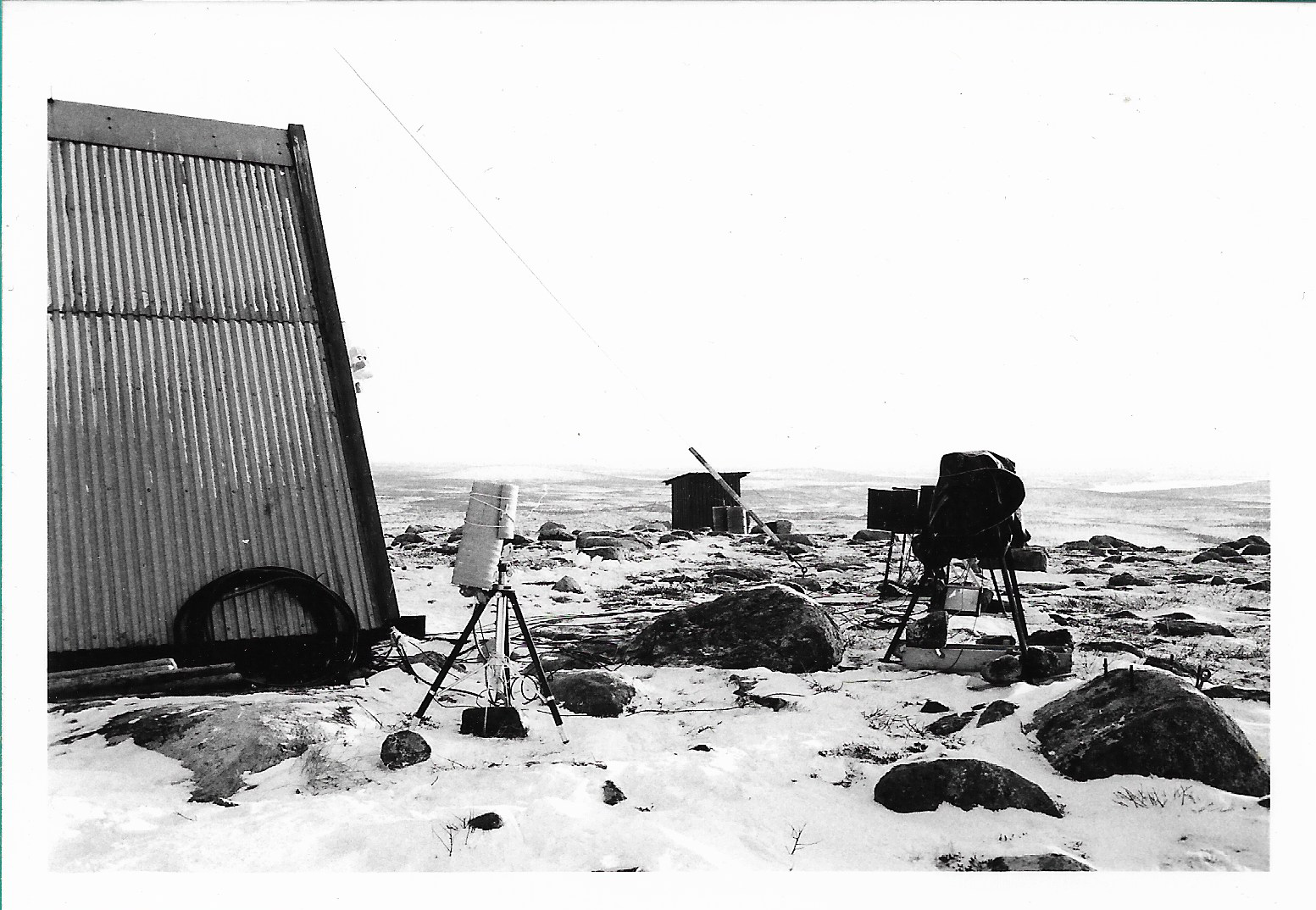
"We had to tie large stones to the boxes to secure them in case of high winds."
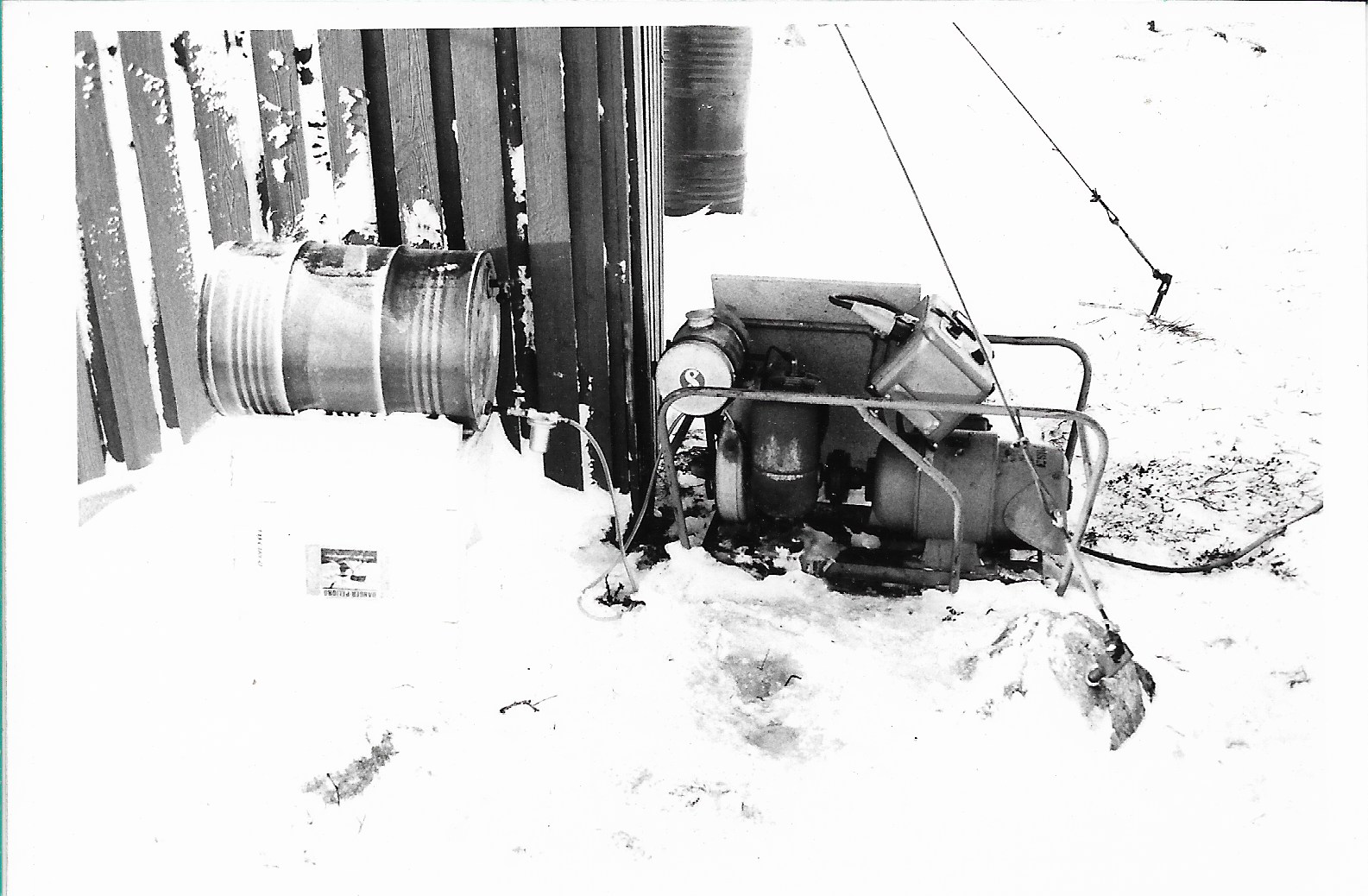
"Lars took me to a second hut, about 30m from the main hut. The second hut was no more than the size of the temporary toilets that are nowadays very common at building sites. This was also strapped into the mountaintop. Inside was a wooden plank with a hole over a bucket.""
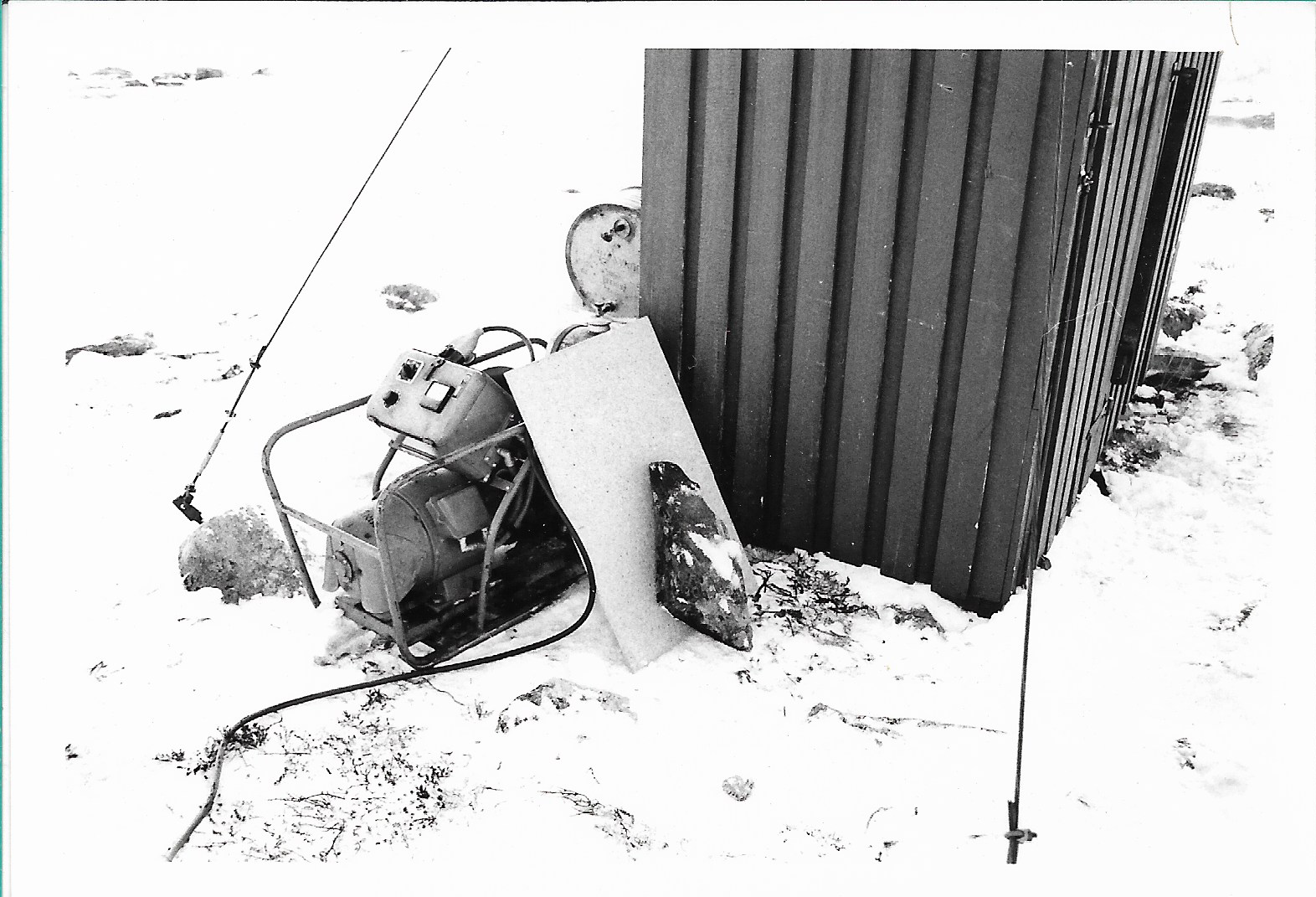
“There is no heating” Lars said. “That is why the two blocks of polystyrene are important. Otherwise your skin will stick to the seat at these temperatures".
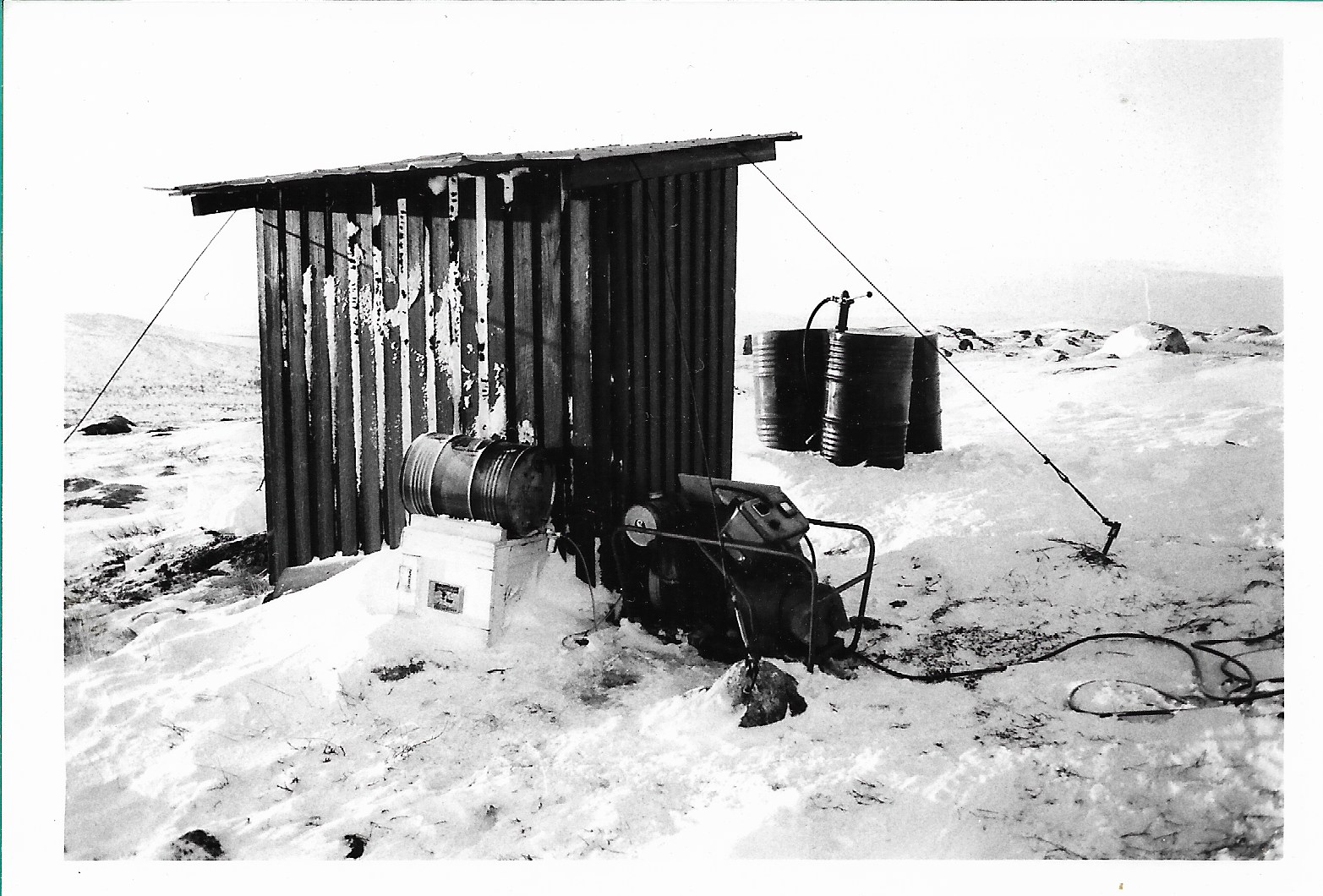
"Lars had found that the generator ran most stably when fully loaded, if not, it would produce interference on our low-light television pictures. We found ourselves using a small electric fan heater to add additional load on the generator, but this made the inside of the hut unbearably hot. We put the fan heater outside when it was operating, heating the Arctic night.
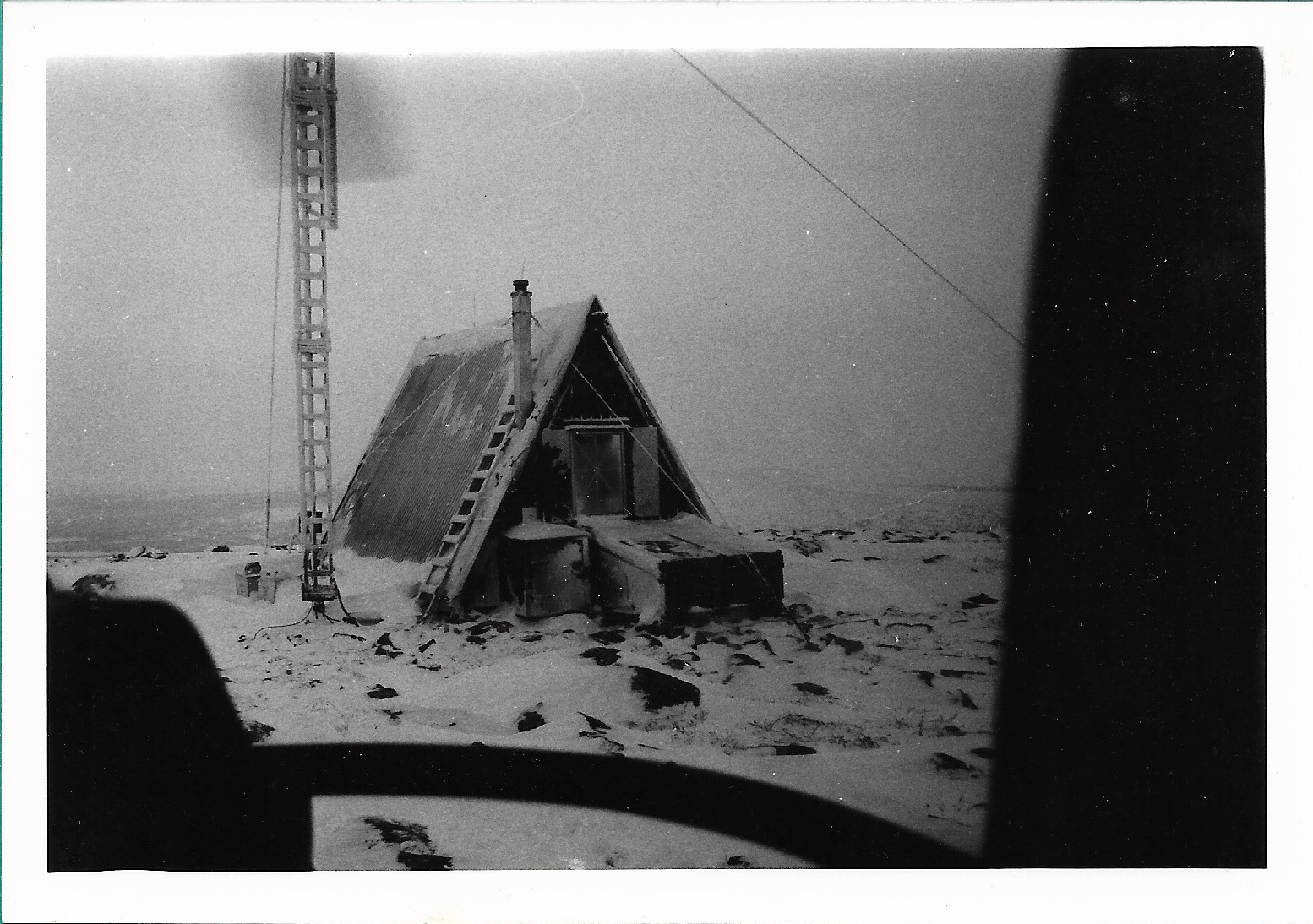
The hut, as seen from the helicopter landing pad: "I was asked to return on the first helicopter flight to attend a campaign 'debriefing'. I was reluctant, I wanted to stay and help complete all the tidying up and shutting down for Rappsaive to be left vacant. I suspect that it was also a reluctance to see an end to the experience."